Harold Greer
Presumed InnocentDetective Harold Greer is the prosecution’s first witness in the trial of Rusty Sabich, presenting the initial police account of Carolyn Polhemus’s discovery and the evidence collected at her apartment. His testimony gives the jury an orderly reconstruction of the scene, while the apparent absence of a key item—the bar glass—underscores a problem for the prosecution even as Greer projects competence.
Identity and Introduction
Greer is a detective and the third officer to arrive at the scene where Carolyn Polhemus was found. The beat officers called him after her secretary, concerned that she had missed an eight o’clock meeting and a nine o’clock court call, contacted the superintendent. The superintendent pushed the apartment door open, looked inside, and recognized that police were needed.
At trial, Greer enters as the prosecution’s first witness. His imposing stature, articulate manner, and calm, orderly presentation make a strong first impression. The narrative notes the strategic value of placing him first: jurors tend to remember the opening witness, and Greer embodies the image of a capable police officer.
Investigation and Evidence
Greer describes what he observed at the apartment and how evidence technicians worked under his direction. He identifies a sealed packet containing fibers lifted from Carolyn’s body and a larger packet containing her skirt, from which additional Zorak V fibers were obtained. His testimony thus connects the physical items gathered at the scene to the investigation’s effort to document and preserve evidence.
He also recounts finding a glass on the bar and watching the evidence technicians seal it in a bag. At trial, however, the glass cannot be located in the police evidence room. Greer’s account establishes that it was present and collected, but the prosecution cannot produce it at that point. The missing item becomes a visible complication in an otherwise controlled presentation of the scene.
Courtroom Testimony and Initial Assessment
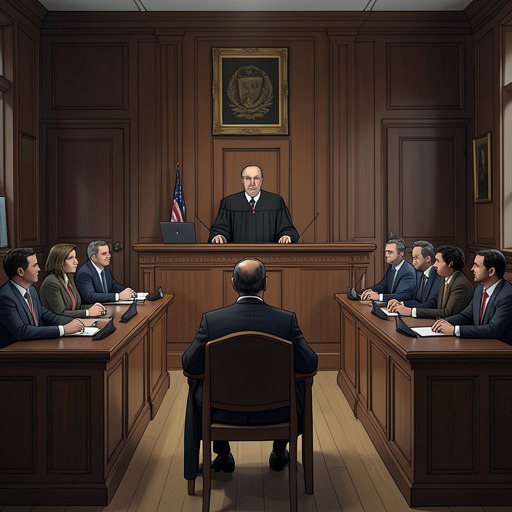
Tommy Molto conducts Greer’s direct examination before Larren Lyttle. Asked to explain his initial assessment, Greer points to the position of the body, the way Carolyn had been tied, signs of disturbance, and an open window above the fire escape. On the basis of those circumstances, he says he initially believed the killing occurred during or as a result of an assault.
Greer’s testimony supplies the jury with the police perspective formed at the scene, rather than a final determination of what happened. His composed delivery and specific account of the evidence contrast with the unresolved question of the glass’s whereabouts, leaving his authority intact while exposing a weakness in the prosecution’s evidentiary presentation.